
Joanne Steinhardt | Studio Visit
The artist gives new life to discarded materials and faded memories

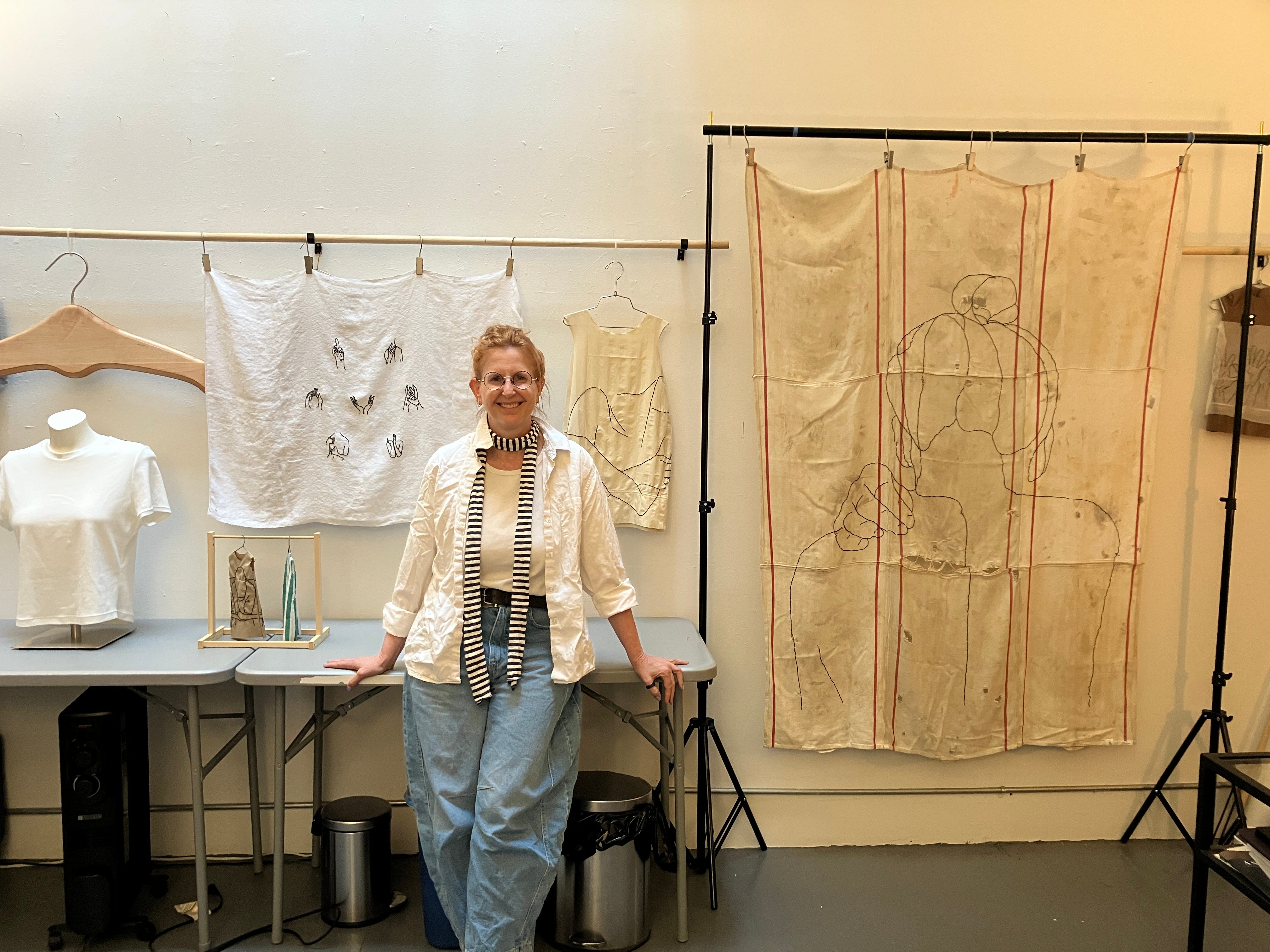
Joanne Steinhardt believes in second chances. The artist collects materials and objects that have been forgotten or deemed no longer useful and reimagines them as artworks imbued with stories from their past lives. “Everything in this room comes with its own story, memory, and its own history,” she said during a recent visit to her Tribeca studio. From old hats, shoes, bed linens, and even a toilet, the artist transforms everyday items into fascinating tableaux that command a closer look.
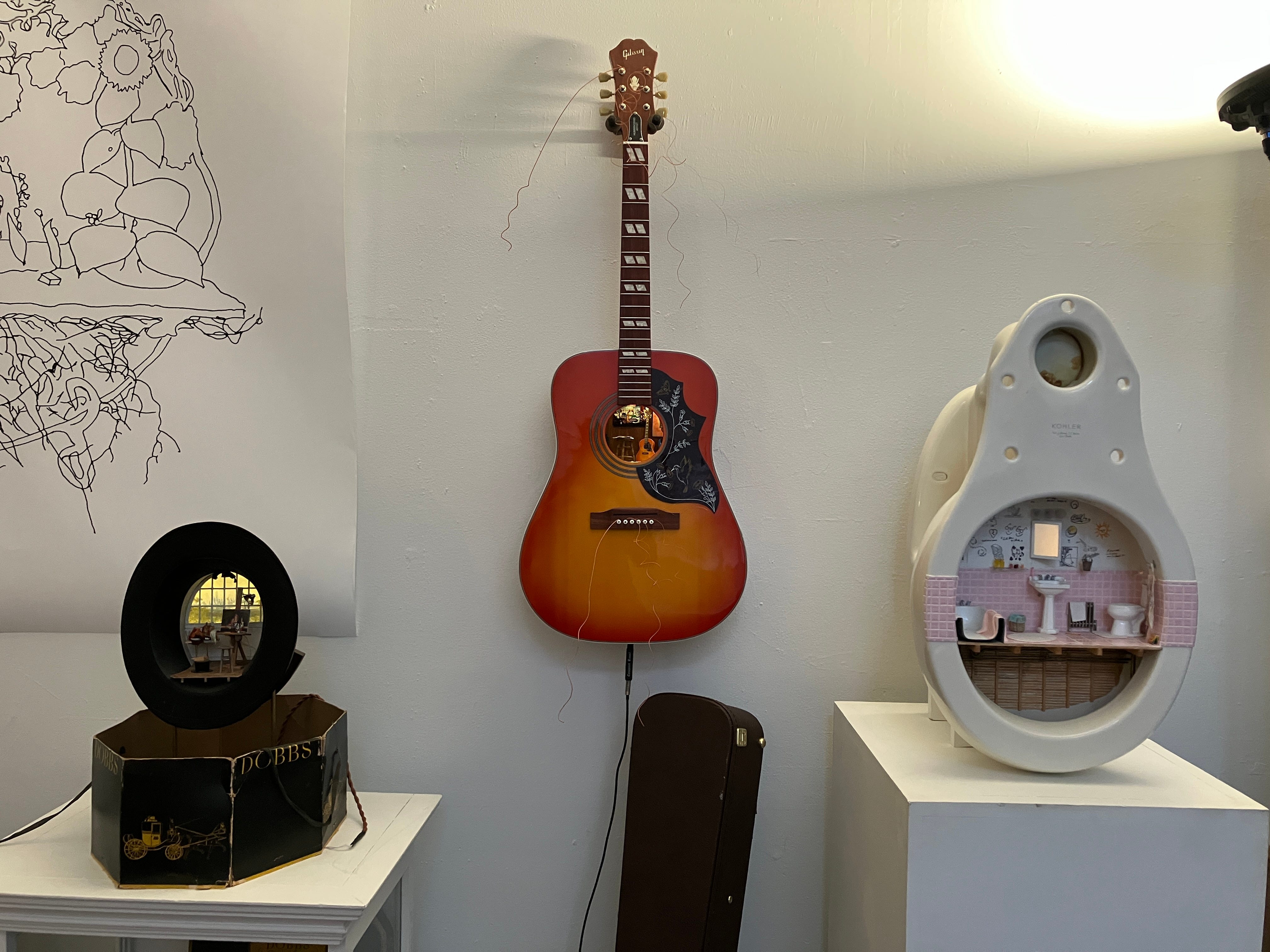
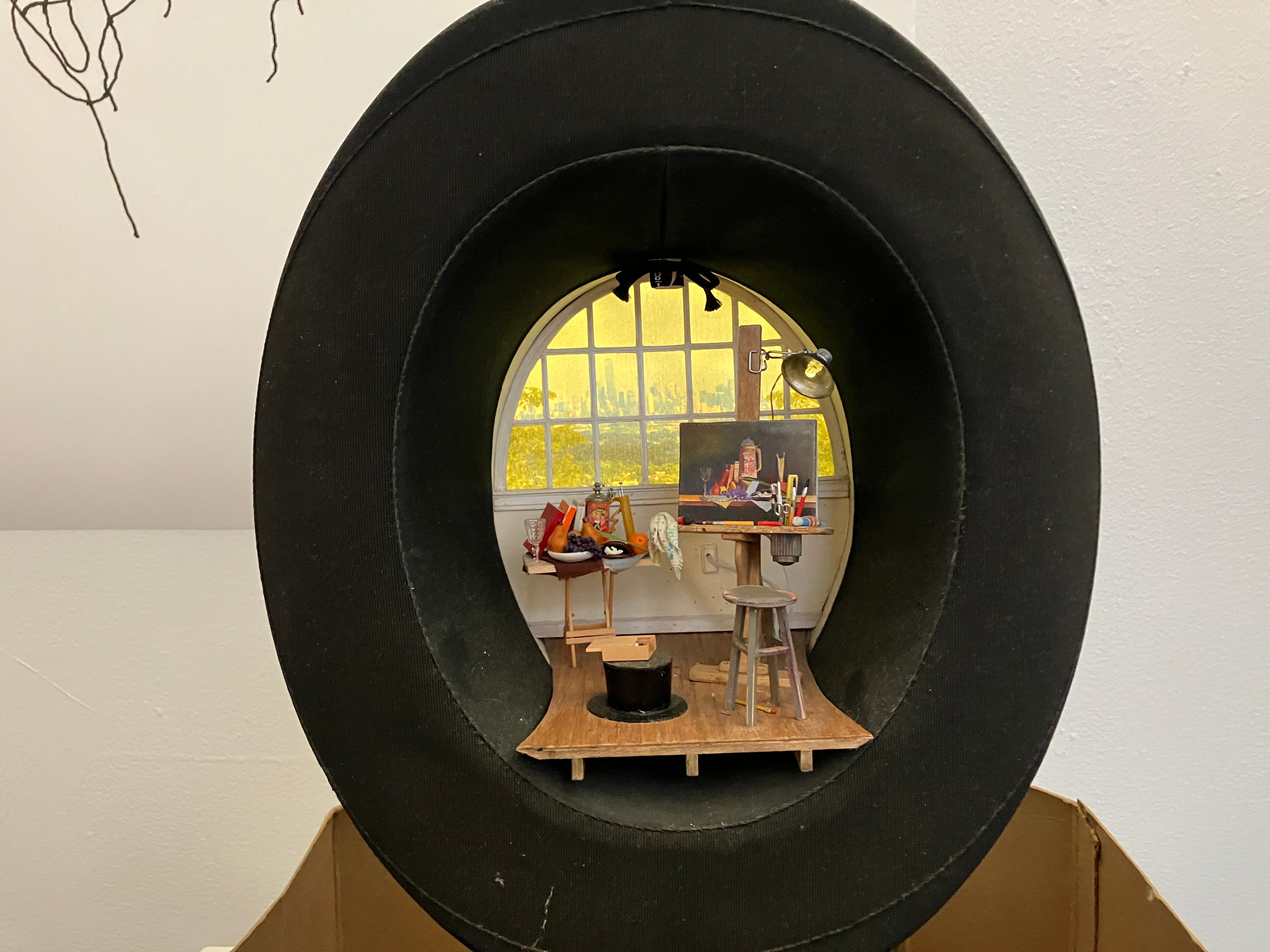
A silk Dobbs & Co. top hat, once owned by Steinhardt’s grandfather, reveals inside its crown a lovingly replicated mini version of his art studio. Her grandfather, an inventor, always wanted to paint, Steinhardt explains. When he retired in his 70s, he set up a studio where Steinhardt often visited him. “I used to sit underneath that easel,” she recalls. Poppy’s Painting Studio features a small reproduction of one of her grandfather’s paintings, fruits laid out for a still life, his easel, and tiny paint brushes. The arched window in the back of his studio showcases the exact view he saw from his workspace in Newstead, New Jersey. Steinhardt painstakingly handcrafts all of the small-scale pieces in her works.
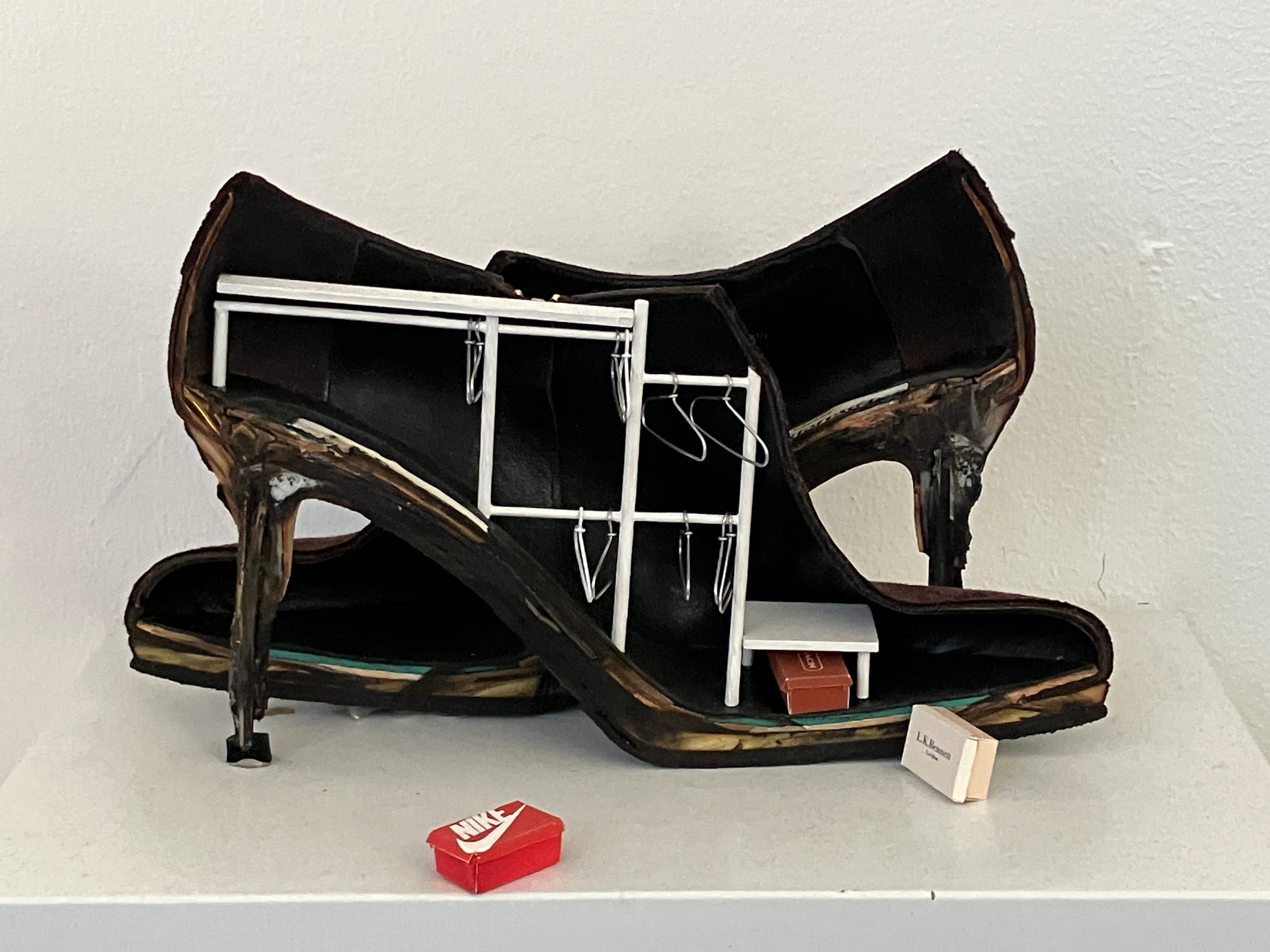
After Steinhardt’s sister learned she had Parkinson’s Disease, she gave the artist several pairs of her shoes that she wouldn’t be able to wear anymore. Instead of wearing them, Steinhardt incorporated them into an installation honoring her sister. Shoes features four pairs of footwear — Steinhardt’s, her mother’s, and one from each of her two sisters — cut in half to display a miniature closet where her sister once stored her shoes.
Continuing her exploration of mobility issues, Steinhardt is currently working on a trio of canes influenced by her sister. Made from scratch, one cane features a long spiral staircase encased in glass. “It’s highly fragile,” the artist explains. The exterior of another cane Steinhardt is working on will be completely wrapped by a staircase winding around the length of its shaft, making the handle of the cane inaccessible. “The cane is usually the first mobility device that anybody uses,” the artist explains, “and frankly, stairs are your first mobility challenge, the first thing that’s going to hold you back from the world.”
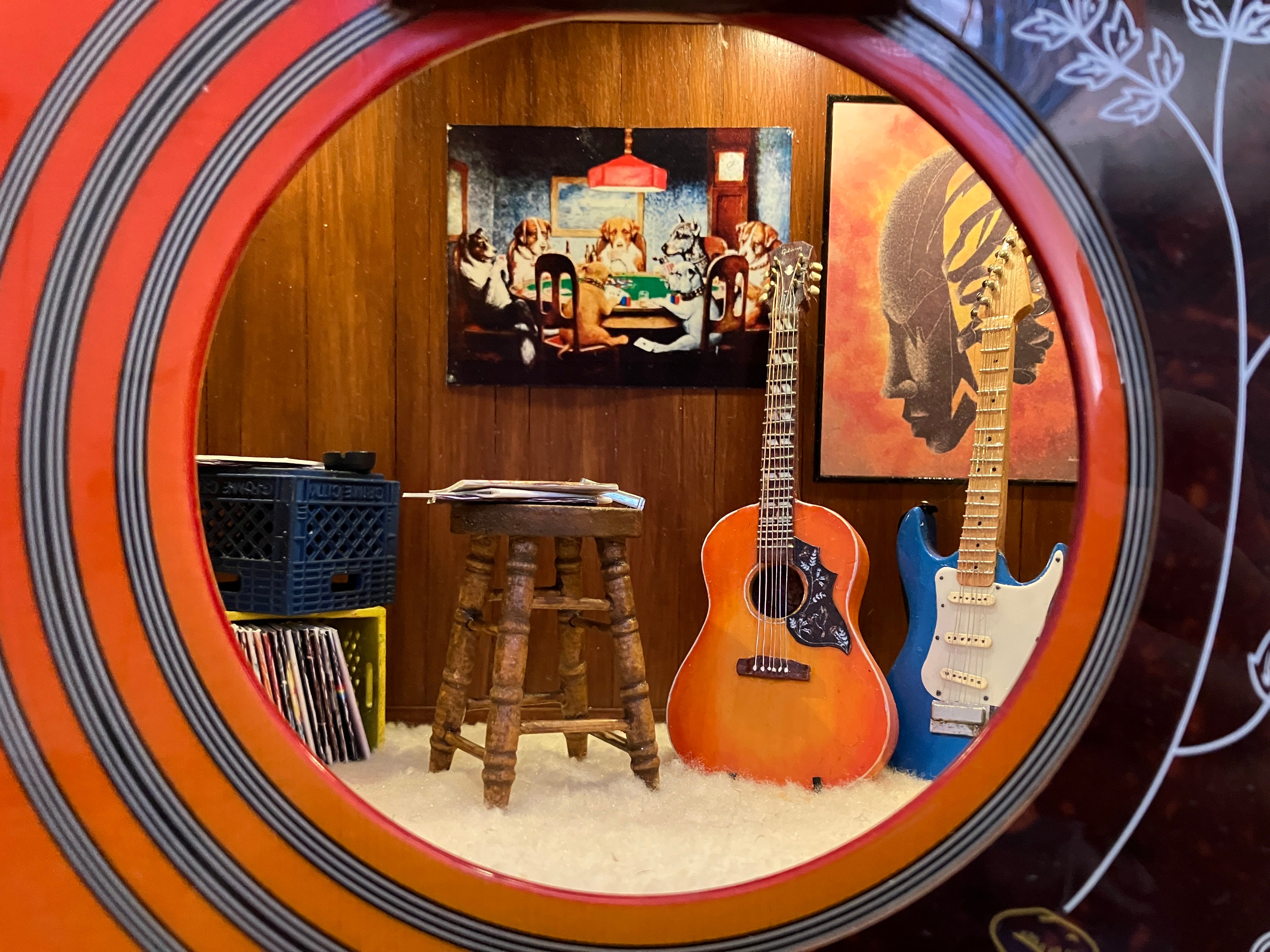
For Hummingbird Steinhardt built the body of a full-size Gibson guitar to display a 1970s basement in the instrument’s sound hole, complete with wood panel walls, popcorn ceiling with cobwebs, shag carpeting, a painting of dogs playing poker, vinyl records in plastic milk crates, a scaled-down Gibson Hummingbird guitar and a Fender Stratocaster. Steinhardt explains that the owner of the original guitar that influenced the work was a self-taught musician who learned to play in that basement as a way to heal from a history of abuse.
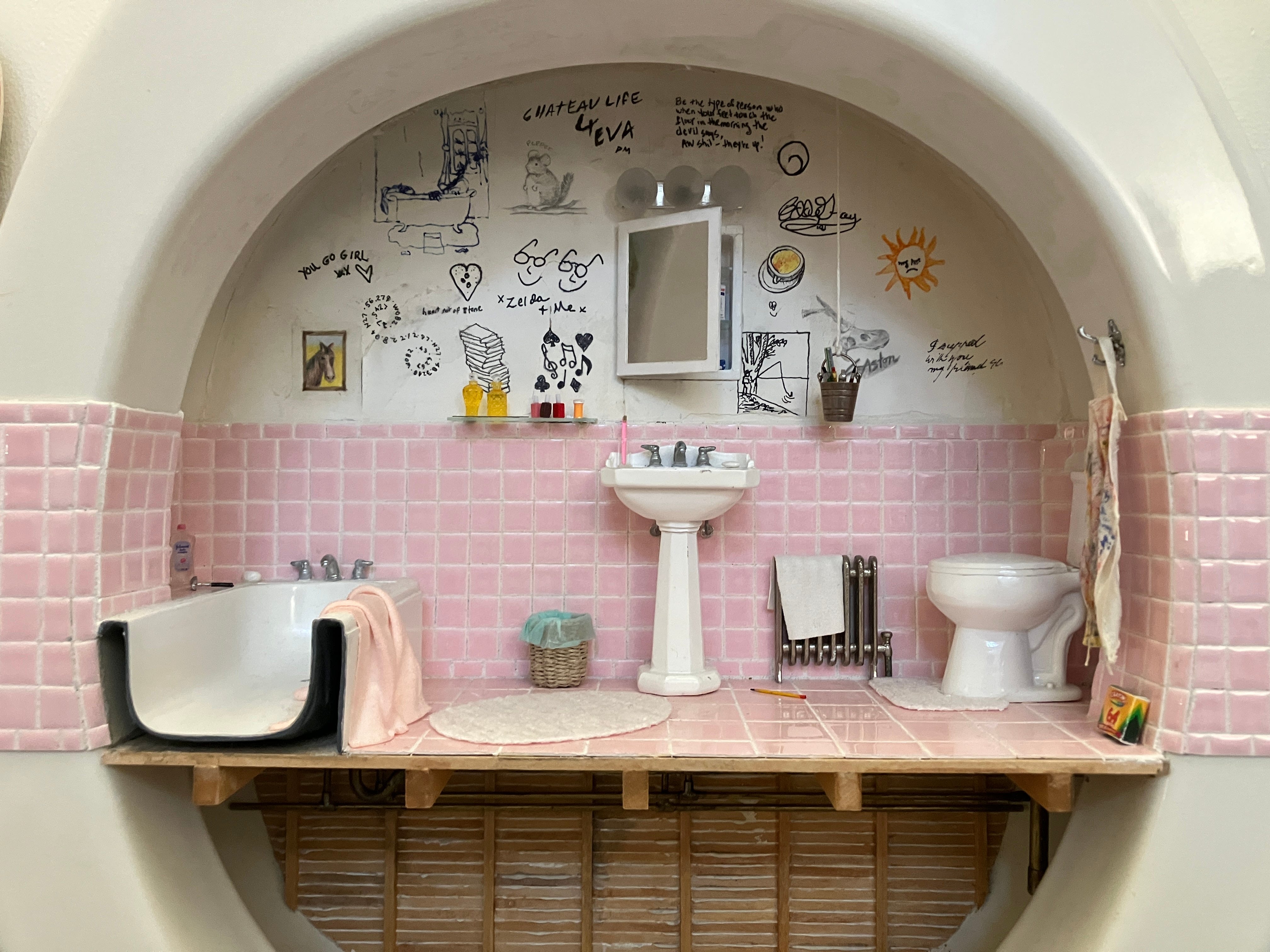
Steinhardt recreated her pink-tiled childhood bathroom inside the bowl of the toilet salvaged from her family home. Along with the meticulously sculpted and painted mini bathtub, sink, and toilet, Shared Spaces features tiny nail polish bottles made with beads and painted with nail polish, a glass shelf made with half of a microscope slide, a tiny pencil made from a toothpick, and even brass plumbing that is “piped correctly,” she notes. The piece includes some of the artwork her mother allowed her to draw on the bathroom walls after the wallpaper was removed.
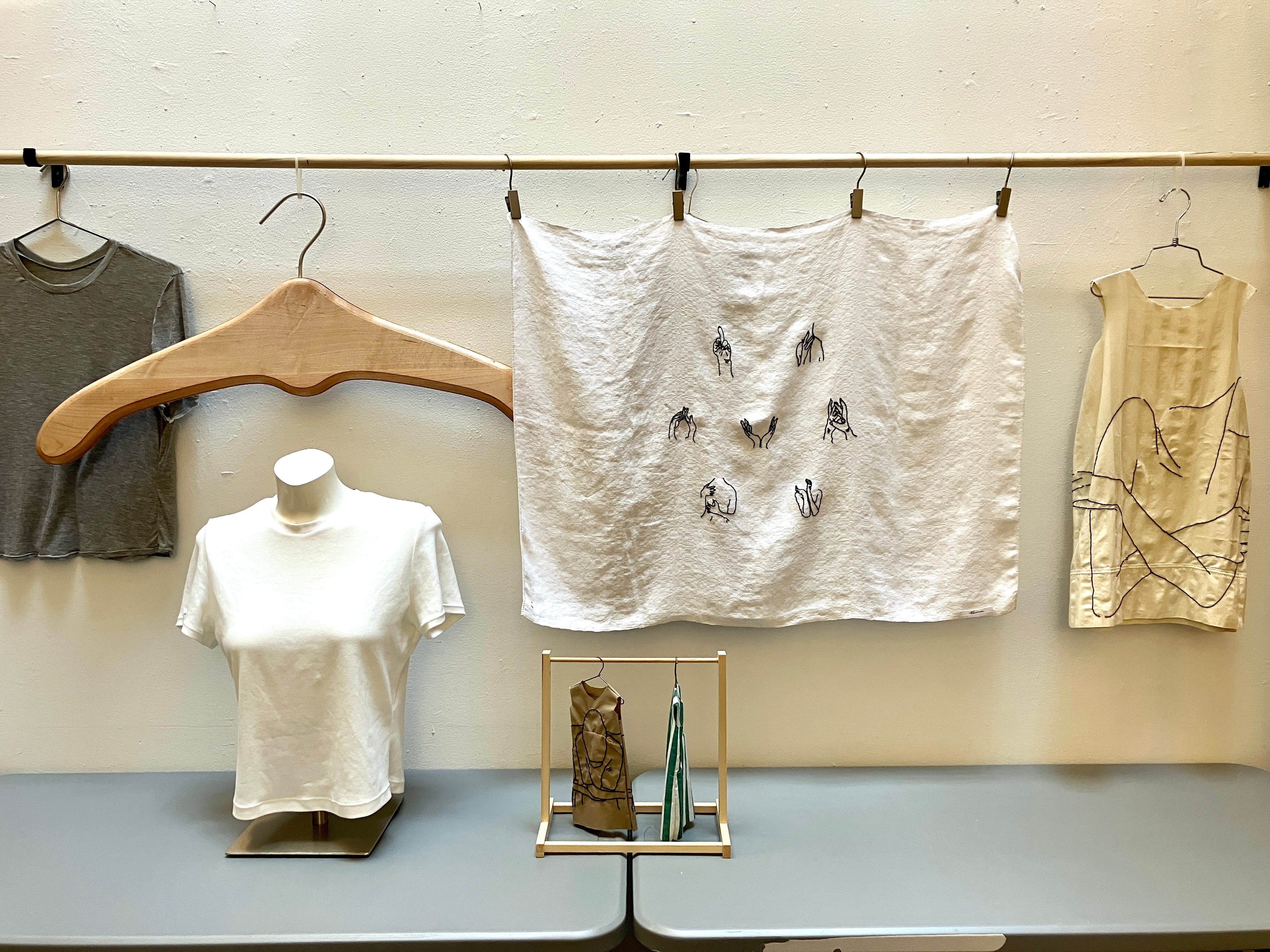
Steinhardt also collects textiles – sheets, dish towels, rags – from family, friends, or family shelters to give them new life. Old, worn sheets have been repurposed into t-shirts, and a kitchen towel now serves as a sampler for stitched hand gestures that often appear in her work. Remnant of the Inner Child, formerly a pillowcase, has been transformed into a doll-sized tunic embroidered with a crouching child. The piece conveys the scared, insecure child in all of us. “This was a pillowcase, so someone’s hopes and dreams and joys were all imbued in there,” Steinhardt says. “There are not too many things that are more intimate than a pillowcase case.”
Many of the fabrics she repurposes were found in her mother’s house. “These are rags that were my mother’s. She saved those but threw out wedding dresses,” Steinhardt notes with dismay. “I really was so interested in the psyche of why we save what we save, those meanings that we connect to objects…. For me, it’s more about usefulness than upcycling. I think we’re very quick to deem things as non-useful. We also make people feel non-useful, when we’ve outlived our purpose.” Her textile works acknowledge these discounted people.
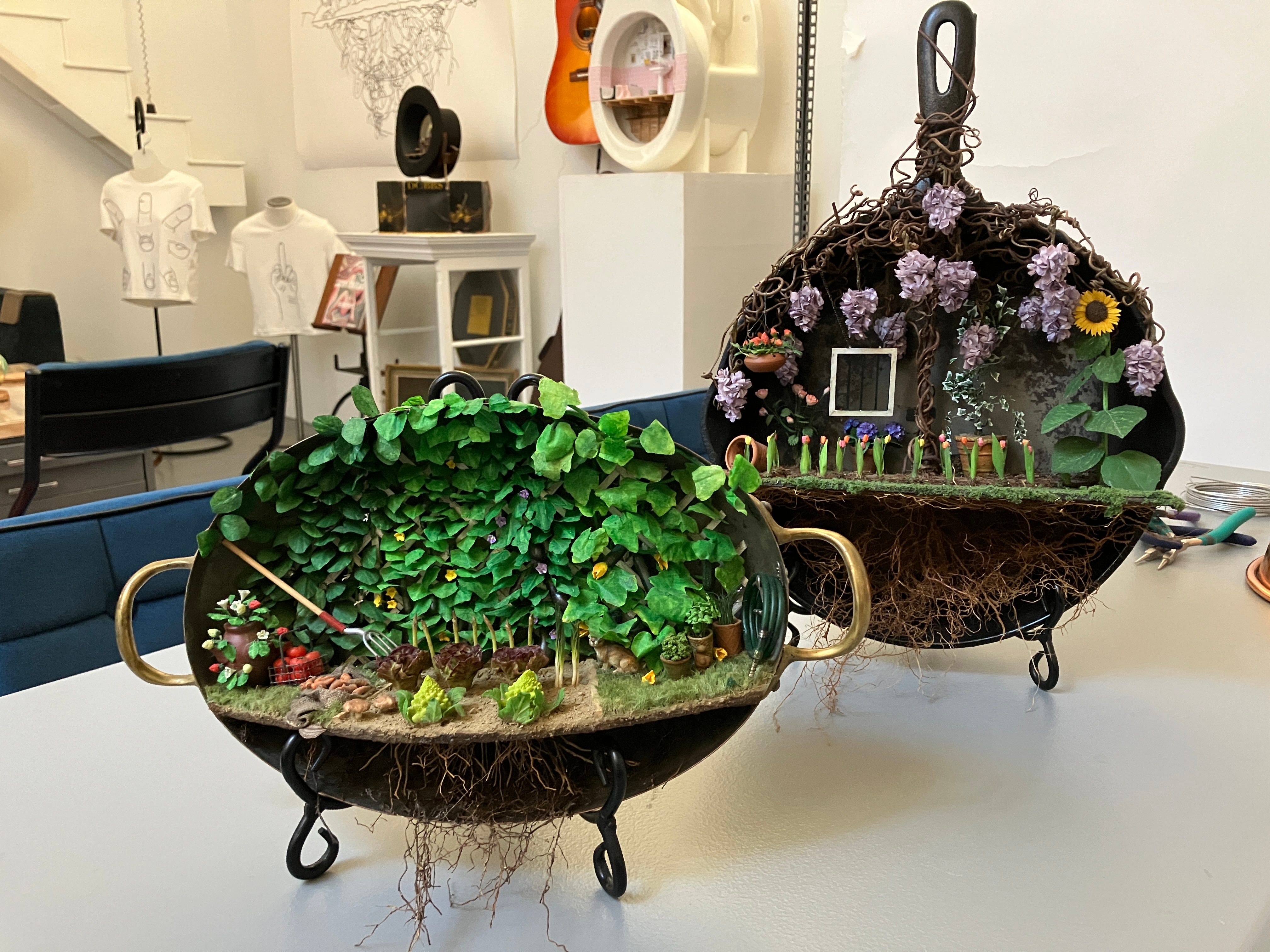
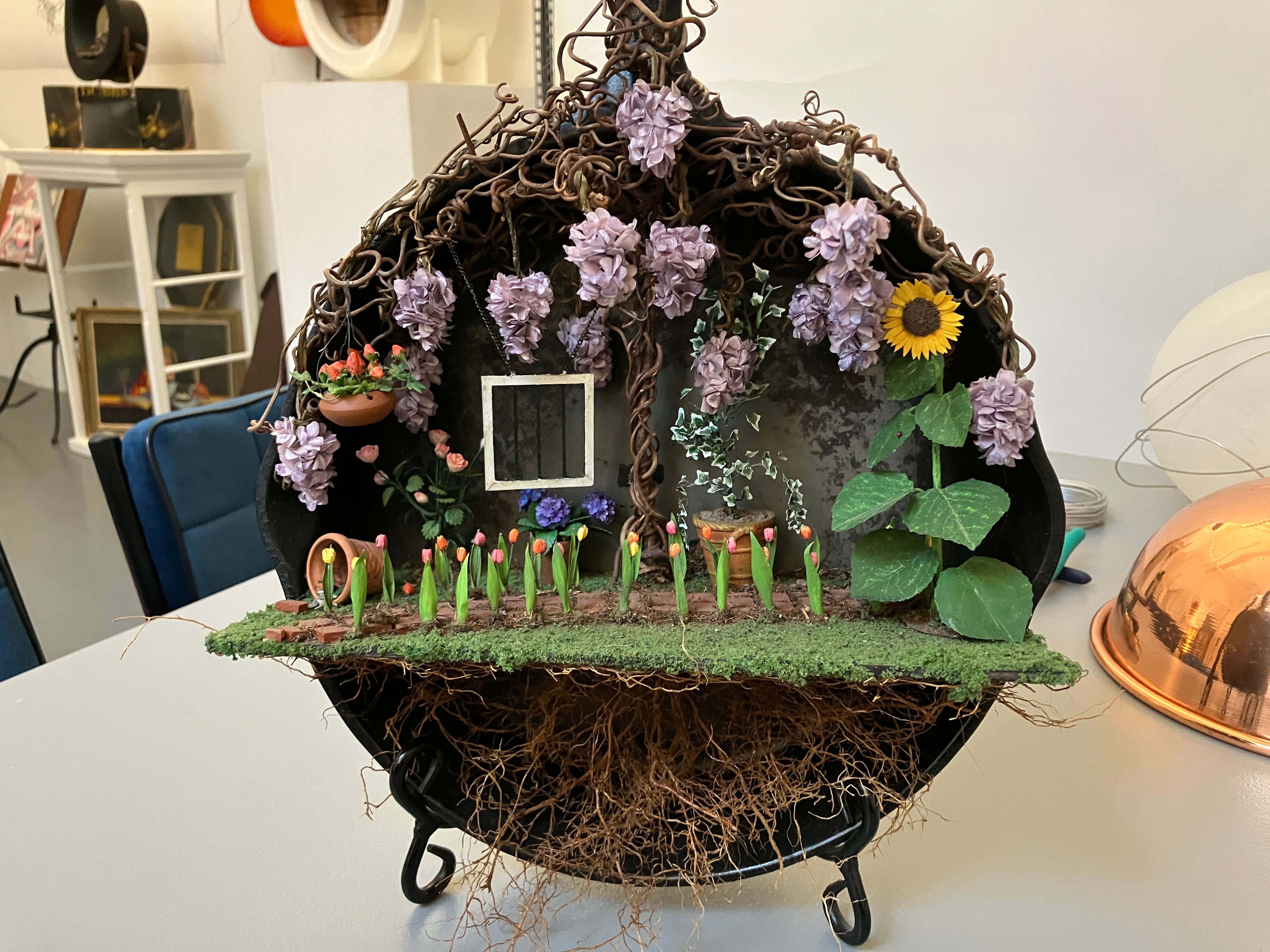
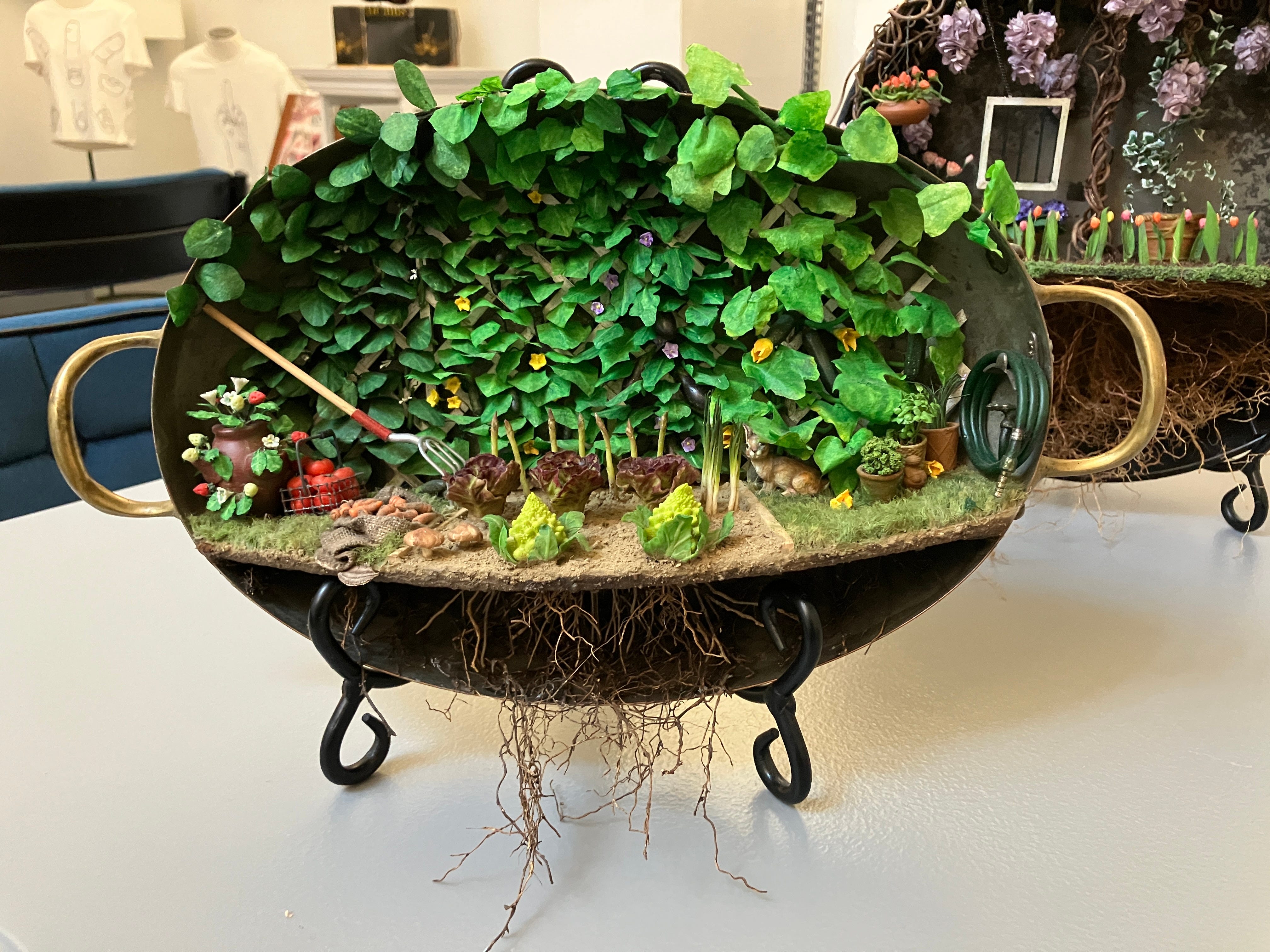
Steinhardt filled two of her mother’s old cooking pans with scenes of her gardens. “My mother was an unbelievable gardener,” she says. Flower Garden depicts a verdant mix of her mother’s flower gardens from her different homes inside a cast iron pan. “People who know [her in] South Orange, New Jersey, know her brick path of tulips. People who know her from the countryside…they know her wisteria and her hydrangeas. People from the Jersey Shore know her sunflowers and her strawberry baskets,” she says. The other copper pan, Edible Garden, houses a replica of her mother’s vegetable gardens, featuring a vine-covered lattice fence, cucumbers, eggplants, lettuce, tomatoes, a garden hose, and a rake. A rabbit, peeking out from beneath a leaf, is a nod to her mother who was named Bunny.
All of these meticulous, intimate works almost never came to be. An incident in 2018 rattled Steinhardt, stalling her art practice for nearly three years. After her mother’s death, Steinhardt started The Cookbook Project, a series of 12 artbooks composed of items from her mother’s kitchen – cutting boards, sheet pans, tin foil, parchment paper. Each book featured one of her mother’s many recipes along with a personal memory about the dish. Steinhardt invited others to contribute their own recipes and stories to the books.
Steinhardt had spent seven years creating these books only to have the entire series stolen from her car in 2018. “The books were gone…nothing of them was recovered,” the artist says. “It was just devastating. For me, that’s actually kind of when my mother died, and I think I really started mourning her.” The experience deflated Steinhardt. “I stopped making completely,” she recalls. “I thought this was the universe telling me not to make [art]…. That’s kind of where I was at for a couple of years.”
Fortunately, she had a change of heart in 2021. Steinhardt returned to the studio and reproduced the twelve books. “I made tiny replicas of all of them.” She tucked the mini cookbooks into a miniature model of her mother’s kitchen that was housed inside a 1950s valise that had belonged to her father. This project was the impetus for Steinhardt’s own second chance — her return to art making. “I think being allotted a second chance by someone else is so precious, but giving yourself one… that’s even harder. That’s even more beautiful,” she says. “I think we each deserve, in our own rights, endless second chances, because we all mess up.”
Looking ahead, Steinhardt is starting work on a series of globes made with items that connect people around the world, such as corn, cotton, flowers, money, water, natural gas, and more. She is also headed to Bentonville, Arkansas in early June to give a talk about “art as a physical healant.”
Learn more about the artist at joannesteinhardt.com.